We may earn money or products from the companies mentioned in this post.
For years, I’ve watched people struggle with this question, trying remedy after remedy while their sleep deteriorates and their frustration builds. The burning, tingling, or shocking sensations that intensify after dark aren’t just uncomfortable, they’re distressing, and the usual advice to “just relax” feels insulting when your feet are screaming at you.
What actually helps depends entirely on what’s causing your symptoms and which sensations dominate your nights. Some people battle searing pain that feels like their feet are on fire.
Quick answer: Match comfort measures to the symptom: reduce unwanted bedding contact, protect numb skin, keep the nighttime route clear, and discuss persistent pain or sleep disruption with your clinician. Avoid direct heat or ice on numb feet and do not change medicines on your own. New wounds or weakness need assessment.
Others deal with such extreme sensitivity that even the weight of a sheet feels intolerable.
Still others face numbness so profound they worry about injuring themselves without knowing it. These are fundamentally different problems requiring different approaches, and lumping them all together under generic “neuropathy tips” does nobody any favors.
The reality is that nighttime neuropathy management needs matching specific strategies to specific symptoms, protecting vulnerable areas from injury, and knowing when home measures aren’t cutting it anymore. There is no guaranteed quick fix, but practical adjustments can make the night easier to manage while you seek appropriate care.
Understanding Why Nights Feel Different
I’ve talked to countless people who function reasonably well during the day, only to find themselves wide awake at 2 AM, feet burning or tingling so intensely that sleep feels impossible.
NIDDK notes that peripheral neuropathy symptoms are often worse at night. That guidance is written in the context of diabetes-related neuropathy; neuropathy has other causes too.
There isn’t one explanation that accounts for every person’s nighttime experience. A quiet room, bedding contact, and the timing of symptoms or treatment are useful things to record, but they do not establish why your pain is worse. I would avoid assuming that changes in blood flow or temperature explain every case.
Nighttime discomfort alone cannot tell you whether nerve damage is progressing. A new pattern, spreading numbness, or emerging weakness deserves clinical review rather than being dismissed as the usual nighttime spike.
The Critical Pre-Bedtime Foot Inspection
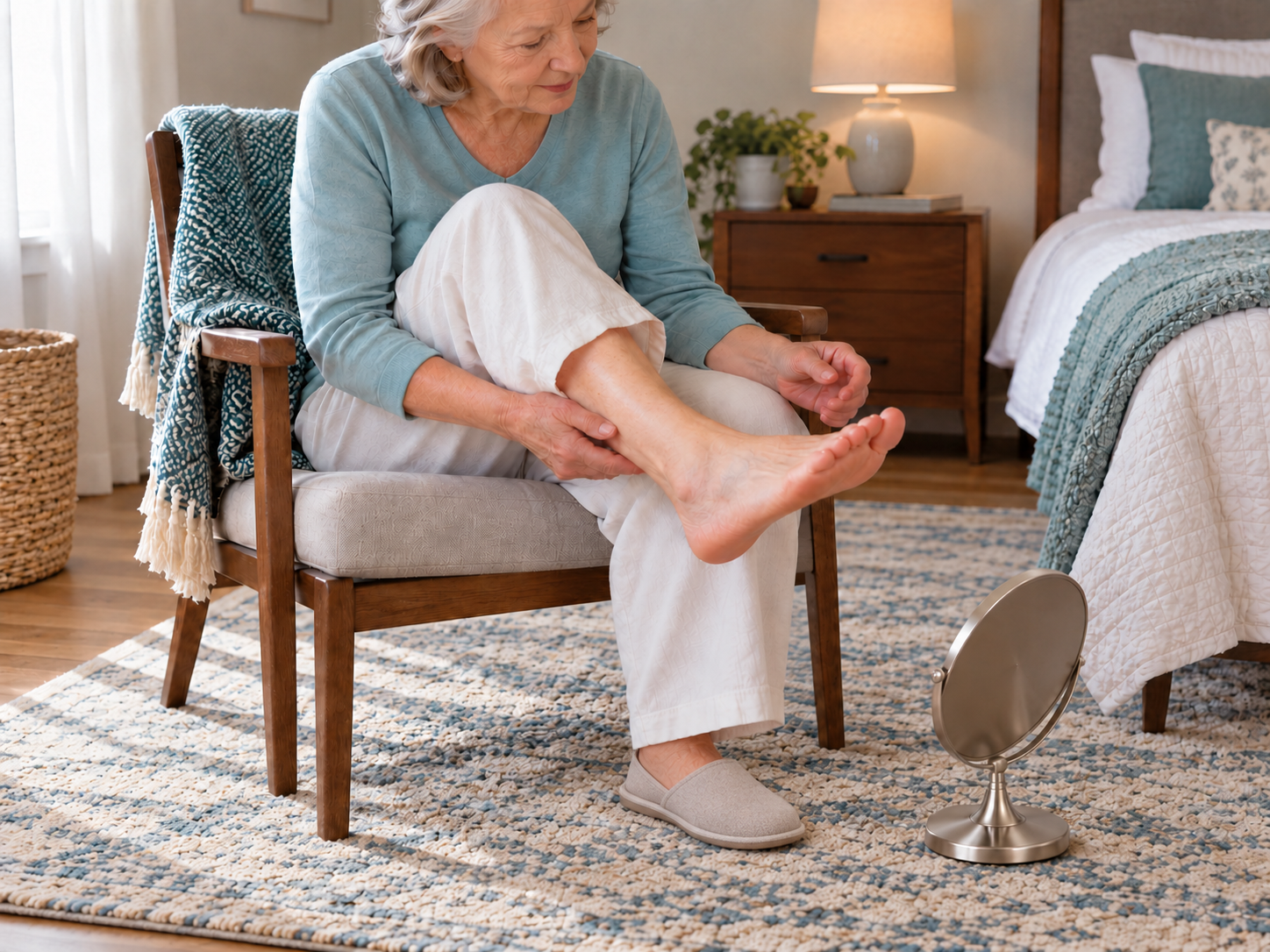
This is one of the most important nighttime routines you can establish, especially if diabetes is part of your picture. Before you even think about getting into bed, take three minutes to properly examine your feet.
I mean really look at them, not just a quick glance.
Check every surface: the soles, between each toe, around the heels, the tops of your feet, and your ankles. You’re looking for any breaks in the skin, cuts, cracks, blisters, or areas where the skin looks thin or damaged. Look for redness, especially if it’s spreading or accompanied by warmth.
Check for swelling that wasn’t there this morning, drainage from any area, bruising you don’t remember getting, or pressure marks that suggest something’s been rubbing.
If you physically can’t see the bottom of your feet clearly, use a mirror placed on the floor or ask someone you trust to help. The aim is to see areas that are easy to miss.
Reduced sensation means you might not feel a developing problem until it’s quite advanced, and catching issues early makes an enormous difference to outcomes.
For people with diabetes, daily foot checks are recommended by NIDDK. Diabetic neuropathy creates a dangerous combination: reduced sensation means you don’t feel injuries developing, while diabetes-related circulation and immune changes mean wounds heal more slowly and infections can progress rapidly.
A tiny blister that a person with normal sensation would notice and protect can become a serious medical problem if it goes undetected for days.
Document anything unusual. Take a photo if you’re not sure whether something’s changing.
And if you do notice a new wound, redness, swelling, or drainage, contact your healthcare team promptly rather than waiting to see if it improves on its own.
Eliminating Pressure Points and Contact Irritation
One of the helpful discoveries I’ve seen people make is that what they interpreted as worsening nerve pain was actually pressure irritation that could be substantially reduced. When your feet are hypersensitive, even minor contact that wouldn’t bother someone with normal sensation can feel intolerable.
Start with your sleepwear. Check for elastic bands that grip your ankles or calves.
Even if they don’t feel tight to your hands, they might be creating constant pressure that irritates sensitized nerves.
Look at seams, particularly around the toes and across the top of the foot. Some people learn that simply switching to seamless socks or turning regular socks inside-out makes a noticeable difference.
Your bedding deserves scrutiny too. Heavy blankets can create surprising pressure on hypersensitive feet.
Even the weight of a standard sheet draped over the tops of your feet can feel unbearable when touch sensitivity is severe.
This is where a bed cradle becomes useful. A bed cradle is a simple frame that lifts bedding off your legs and feet, creating a tent-like space underneath.
They are supports designed to keep fabric away from sensitive areas. Make sure any support is stable and does not create a new pressure point; ask your healthcare team if positioning is difficult.
The mattress edge and footboard position matter more than you might expect. If your feet are pressing against the footboard or hanging off the mattress edge, that constant pressure can worsen symptoms.
Experiment with positioning pillows to support your legs in a way that keeps pressure off the most sensitive spots.
Check for wrinkled sheets, especially under your heels and calves. A bunched-up area of fabric can create a pressure point that becomes increasingly irritating over hours.
Taking thirty seconds to smooth everything out before you lie down can improve comfort.
Creating a Safer Nighttime Environment

This aspect of nighttime neuropathy management doesn’t get enough attention, but it’s absolutely crucial if numbness or weakness is part of your symptom picture. Reduced sensation in your feet means you’re getting less feedback about foot position and surface contact, which can increase fall risk.
Nighttime trips to the bathroom deserve particular attention.
Start by establishing clear, obstacle-free pathways from your bed to the bathroom and to anywhere else you might need to go at night. Remove throw rugs that can slip or catch your toes.
Clear away any items that could become tripping hazards. Make sure electrical cords are secured against walls rather than crossing walkways.
Lighting is important here. Total darkness forces you to navigate by feel alone, which is exactly what compromised sensation makes unreliable.
Install night-lights that provide enough illumination to see where you’re stepping without being so bright they disrupt sleep.
Motion-activated lights work particularly well because they turn on automatically when you get up, eliminating the need to fumble for switches.
If balance is compromised along with sensation, consider what support is available along your nighttime route. Use prescribed mobility aids and professionally fitted supports where needed, rather than relying on furniture that could move or tip.
Some people benefit from grab bars or rails, particularly in the bathroom.
Keep essential items within easy reach of your bed: glasses, phone, mobility aids, and anything else you might need. Having to search for these items while half-asleep and unsteady increases fall risk unnecessarily.
Footwear for nighttime walking is worth discussing with your healthcare team. Some people do better with supportive slippers or shoes that provide stability and protect numb feet from stepping on something sharp.
If footwear makes you unsteady, ask for a fit and balance assessment rather than defaulting to barefoot walking on numb feet.
The right answer depends on your specific balance challenges and degree of sensation loss.
Temperature and Tactile Comfort Strategies
This is where well-meaning advice can create dangerous situations. Burning sensations can make cooling seem appealing, while cold sensitivity may make warming feel necessary. The sensation is not a reliable guide to skin temperature when nerves are damaged.
Do not put heating pads, hot-water bottles, electric blankets, ice packs, or very hot or cold water directly against numb feet. Reduced temperature sensation can prevent you from noticing an injury. NIDDK’s diabetes foot-care guidance emphasizes protection from both hot and cold.
I’ve seen burns happen, and the resulting wounds can be slow to heal. I would focus on a comfortable room temperature and bedding that does not rub or press on sensitive areas, rather than testing hot or cold treatments on skin that may not give reliable warning signals.
If skin protection or positioning is difficult, ask your clinician or podiatrist for advice that fits your sensation, circulation, and skin condition. A new skin change needs assessment, not another temperature experiment.
Medication Timing and Treatment Discussions
If you’re taking medication for neuropathic pain and nights remain difficult, talk with your prescriber about the pattern. Do not change the dose or timing, skip doses, or stop a prescription on your own.
The NHS treatment overview lists medicines such as amitriptyline, duloxetine, pregabalin, and gabapentin for nerve pain. The choice depends on the cause, other conditions, current medicines, and side effects. A medicine that suits someone else may not suit you.
Sleepiness or dizziness is a side effect to discuss, not a reason to use a medicine as a sleep aid. For example, gabapentin can cause tiredness and dizziness, which may complicate nighttime walking.
What matters is the pattern: when symptoms peak, when relief wears off, and when side effects occur. This gives your prescriber more useful information than simply saying that the medicine is not working well.
Topical treatments also need appropriate advice. Capsaicin can irritate or burn, should not be used on broken or inflamed skin, and is not an instant bedtime fix. Follow the specific product instructions and your clinician’s or pharmacist’s advice.
Distinguishing Symptoms That Need Different Responses
Not all nighttime neuropathy symptoms should be approached the same way, and part of effective management is recognizing which sensation you’re actually dealing with. This sounds obvious, but it’s easy to default to treating everything as generic “neuropathy pain” when different symptoms actually call for different strategies.
Burning pain that feels like your feet are on fire might respond to pressure reduction and bedding adjustments, but heat application would be counterproductive and potentially dangerous. Tingling and pins-and-needles sensations might be less bothersome with gentle movement or position changes.
Extreme touch sensitivity needs contact reduction, lighter bedding, a bed cradle, or smooth sleepwear without seams.
Numbness can coexist with pain, but loss of feeling also calls for injury prevention and safety. Weakness is fundamentally different from pain or altered sensation.
If you’re noticing increasing difficulty lifting your feet, walking steadily, or maintaining balance, that’s a functional change that deserves evaluation rather than just comfort measures.
Progressive weakness can signal conditions that need specific treatment, and it significantly affects fall risk.
Some people experience shooting or electric-shock-like pains that are distinct from constant burning or tingling. These might occur with certain movements or positions, which is useful information for both comfort strategies and medical discussions.
Track which symptom is actually most problematic for you on any given night. “My neuropathy was bad” is much less useful information than “I had severe burning on both soles that prevented sleep for two hours” or “numbness extended higher up my calves than usual” or “I had three episodes of sharp shooting pain when I changed position.”
Building a Symptom and Sleep Log
This might feel tedious, but it’s one of the most valuable things you can do if symptoms are disrupting your sleep regularly. A written record reveals patterns that are easy to miss when you’re just trying to get through each night.
Record the date and time, which specific symptoms you experienced (burning, tingling, numbness, pain, weakness, sensitivity), where they occurred (feet, calves, hands, spreading pattern), and how severe they were using a consistent scale. Note what might have triggered or worsened symptoms.
Was it after walking? Related to bedding contact? Following medication timing?
Just lying still? Document the sleep impact specifically. How long did it take to fall asleep?
How many times did symptoms wake you?
How long were you awake each time? This is different from pain severity, sometimes moderate pain that prevents sleep is more problematic than severe pain that you can eventually sleep through.
Include any findings from your foot inspection: redness, swelling, cuts, blisters, pressure marks, or anything unusual. Photograph anything that concerns you.
Record what you tried and what happened. Did pressure reduction help? Did position change make any difference?
Did prescribed medication provide relief, and if so, how soon and for how long?
After a couple of weeks, you’ll have a record that can inform comfort adjustments and medical discussions. You might notice that symptoms are consistently worse after particular activities, or that they correlate with medication timing, or that certain bedding arrangements actually make a difference.
These patterns are valuable.
When Comfort Measures Aren’t Sufficient
Persistent sleep disruption is itself a reason to seek help. If symptoms repeatedly prevent sleep or leave you exhausted, arrange a review even if their character has not changed.
Increasing pain, spreading numbness, new weakness, more frequent tripping, or difficulty lifting a foot deserve prompt medical assessment. These changes should not be managed only by adding more comfort measures.
Contact your healthcare team promptly about a new foot wound, redness, warmth, swelling, drainage, or a wound that is not healing—especially if you have diabetes. Rapidly worsening changes or fever with a foot problem need urgent assessment.
When to seek emergency care
New loss of bladder or bowel control, difficulty passing urine, or numbness around the groin or buttocks—especially with back pain, leg pain, or weakness—needs emergency assessment. These can be signs of a spinal emergency such as cauda equina syndrome. Do not assume they are routine peripheral neuropathy symptoms.
A changed symptom pattern still needs assessment even when it does not fit an emergency description. This article cannot determine the cause or urgency of an individual’s symptoms.
People Also Asked
Does gabapentin help with nighttime neuropathy?
Gabapentin is used for nerve pain and may help some people. It can also cause sleepiness or dizziness. Discuss persistent nighttime symptoms and side effects with your prescriber; do not move doses to bedtime or change the schedule yourself.
Can vitamin B12 deficiency cause burning feet?
Vitamin B12 deficiency can cause peripheral nerve problems, but burning feet do not establish that diagnosis. The NHS describes neurological complications of B12 deficiency, including peripheral neuropathy. A clinician can assess whether testing and treatment are appropriate. Supplements are not a universal treatment for neuropathy, and recovery is not guaranteed.
Why does diabetic neuropathy feel worse when lying down?
Symptoms are often worse at night, but lying down does not establish a single cause. Record whether bedding contact, position, or treatment timing seems related. Do not assume that nighttime symptoms prove worsening nerve damage or a blood-flow problem.
What should I look for during a foot check?
Look over the soles, tops, heels, and between the toes for cuts, blisters, redness, swelling, or other new changes. Use a mirror or ask for help if you cannot see clearly. Seek advice about anything concerning rather than relying on pain to warn you.
Can sleeping position affect comfort?
A position that reduces rubbing or unwanted bedding contact may feel more comfortable. There is no single best position for everyone. If you have skin damage, circulation problems, or cannot reposition easily, ask your healthcare team about appropriate support and pressure relief.
Key Takeaways
Finding what helps peripheral neuropathy at night means matching specific strategies to your specific symptoms: pressure reduction and bed cradles for touch sensitivity, medication timing discussions for breakthrough pain, injury prevention and safe environments for numbness, and systematic evaluation for progressive or changing symptoms.
Daily foot inspections before bed are protective, especially with diabetes, because reduced sensation means wounds can develop and worsen without producing warning pain.
Heat on numb skin is dangerous and should be avoided regardless of how soothing it sounds, because temperature-sensation loss means burns can occur without adequate warning.
A symptom and sleep log reveals patterns that guide both home comfort strategies and medical discussions, turning vague complaints into specific, actionable information.
Nighttime worsening is common and real but doesn’t automatically mean rapid nerve deterioration, though new patterns, increasing pain, spreading numbness, or emerging weakness do warrant proper evaluation rather than just adding more comfort measures.
For related daytime footwear considerations, see my Aetrex shoe comparison. Footwear comfort is a separate question from treating nerve damage.
This article is educational and does not replace individualized medical advice. Illustrations are AI-generated editorial scenes, not photographs of the author or actual patients.