
We may earn money or products from the companies mentioned in this post.
Look, I need to be upfront about something right away. I haven’t personally tested these shoes.
This is a research-based comparison where I dug through product listings, checked return policies, and tried to figure out what’s actually documented versus what’s just marketing fluff.
I’m dealing with sensitive feet myself, and the struggle to find shoes that don’t rub, that I can actually get on without a 10-minute wrestling match, and that have real room inside is… exhausting. So when I started looking into this Aetrex comparison, I wanted to focus on the practical stuff that actually matters day-to-day.
Things like: Can I tie laces or do I need something easier? Will my foot slide around?
Can I swap the insole?
What width options actually exist right now (not what existed two years ago or what the general brand “usually” offers)?
Prices and availability were checked on October 20, 2026. Double-check before you order because stock changes constantly.
The Three Models I’m Looking At
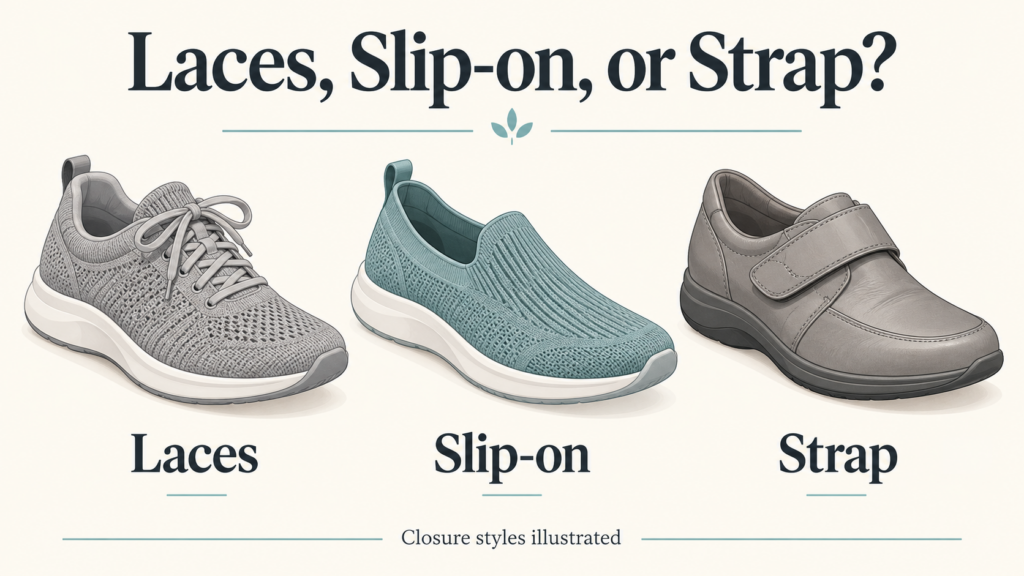
I’m comparing three women’s everyday shoes: the Carly (lace-up sneaker), the Dash (slip-on sneaker), and the Karina (monk strap style).
Each one closes differently, which ends up being the biggest practical difference when you’re dealing with neuropathy, toe sensitivity, or just feet that hate most shoes.
| Model | Closure | Width shown | Listed price |
|---|---|---|---|
| Carly Grey AS106W | Laces | Medium | $129.95 |
| Dash Black AP950W | Slip-on | Not specified in the reviewed selector | $149.95 |
| Karina Black DM500W | Hook-and-loop monk strap | Medium and wide | $144.95 |
These are the options and prices displayed on the linked product pages, not a guarantee of stock in every size. All three list removable insoles. Carly and Dash use knit uppers; Karina lists genuine leather. Check the exact color, width, and size before ordering.
Carly Arch Support Sneaker: Lace Adjustment and Knit Construction
The Carly uses regular laces and has a stretchy knit upper. There’s also a pull tab at the back.
Laces offer several points of adjustment. Loosen them before putting the shoe on, then adjust the tension without creating pressure across the foot.
If your heel slips, reassess the size and fit rather than overtightening the laces.
If the top of your foot gets pressured, you can loosen them.
That adjustability matters a lot for walking. A shoe that lets your heel lift may rub even when the toe area feels roomy.
Lace adjustment may help, but it cannot correct every mismatch between a shoe and your foot.
The knit upper is helpful if you hate stiff material pressing on your foot or toes. It stretches some, which Aetrex markets as a comfort feature.
But stretchy doesn’t automatically mean wide, and it doesn’t prove the shoe has enough room for bunions, hammertoes, or swelling.
Here’s the tradeoff: laces are annoying.
If bending down is hard, if your hands don’t work great in the morning, or if you’re putting shoes on many times a day… tying laces gets old fast.
You could consider elastic laces for easier entry, although their adjustment and retention depend on the design. That might be fine, or it might turn a secure shoe into a sloppy one.
What the Listing Actually Says About Fit
According to the Carly product page, sizes run from 5-5.5 through 11.5-12 in medium width. The listing recommends standing while measuring and wearing the socks you plan to use with the shoes.
It also says to size up if you’re between sizes.
I’m cautious about that advice. Sizing up gives you more length, but it doesn’t give you genuine width.
You can end up with a loose heel and toes that still feel crowded.
The reviewed grey Carly selector shows medium width. Do not assume another color or model’s width availability applies to this variant.
Aetrex claims the Carly has arch support and cushioning, which is standard marketing language. Those claims come from the manufacturer.
They haven’t been independently tested for this comparison.
Insole Swapping
The Carly has a removable insole with arch support and foam cushioning. Aetrex says you can replace it with one of their more customized orthotics.
Removing the stock insole creates vertical space, but your replacement insert still needs to match the shoe’s length, width, arch position, and heel shape. A thicker orthotic might make the upper feel tighter across your foot.
If you’re curious about Aetrex’s insole lineup, there’s an existing review of the Aetrex Extreme Comfort Insoles that goes into more detail.
If you want lace adjustment and don’t mind fastening them, check current Carly availability here.
Dash Arch Support Sneaker: Easy Entry, Less Fit Control
Aetrex describes the Dash as a slip-on sneaker. It has a knit upper and removable insole.
The Dash product page describes a stretch-knit upper and slip-on construction. It does not document a separate adjustable fastening system.
Check the live product page and photos before ordering to confirm exactly how it closes.
Slip-on shoes are great when bending down is difficult or when you’re in and out of shoes all day. You don’t have to mess with laces or straps every single time.
The downside is you get way less control over how the shoe holds your foot.
If the fit depends entirely on the shape and stretch of the upper, there’s not much you can do about a heel that lifts, an instep that feels tight, or general looseness.
Slip-ons work well when the shoe grips your heel and midfoot securely without forcing you to curl your toes to keep it on. If you have to grip with your toes to stop the shoe from sliding forward, the convenience factor just created a new problem.
The Dash listing confirms it has a 1.3-inch heel height, knit upper, removable insole, padded heel, something called an UltraSKY midsole, and a rubber-pod outsole. It repeats Aetrex’s arch-support and cushioning claims.
Those are construction details. They describe what the shoe is made of and what the company says it does.
They don’t establish that the shoe will relieve your pain or work safely with reduced sensation.
The reviewed listing displays $149.95, but does not clearly specify width options in its selector. Confirm the exact fit rather than choosing it only for convenient entry.
If easy entry is your main concern and you want to check current Dash details, see the listing here.
Karina Monk Strap: Leather and Hook-and-Loop Adjustment
A monk-strap shoe with a hook-and-loop closure could be a decent middle ground. Easier to manage than laces, but still offering some adjustment that a pure slip-on doesn’t give you.
How well it works depends on the strap’s length, position, and how many usable settings it has. A short strap with limited adjustment might work perfectly for one foot shape and terribly for another.
Hook-and-loop can be easier to operate if your fingers don’t have great dexterity. But the shoe still needs to hold your heel securely after you fasten it.
The Karina also looks less athletic than the sneakers, which might matter if you want something you can wear to work or for errands without it screaming “gym shoe.”
Appearance should not outweigh fit, though.
The Karina listing confirms a hook-and-loop monk strap, genuine-leather upper, removable insole, EVA-foam midsole, and rubber outsole. The black variant shows medium and wide choices and a $144.95 price. Confirm stock for the width and size you need.
The strap provides adjustment, but the listing does not quantify its usable range. That matters if your instep is high or your foot volume varies.
How I’d Choose Between These Three Closure Types
Laces Give the Most Control
If keeping your heel secure is the top priority, laces usually win. You can adjust the forefoot separately from the heel, and you can change tension if swelling varies during the day.
They need more hand use and bending unless you modify them with elastic laces or use a long shoehorn. Any modification needs to still keep the shoe secure for walking.
Slip-On Works When Entry Is the Biggest Problem
The Dash might be the most convenient if quick entry is your main issue, assuming your foot stays secure without excessive toe gripping.
Test it with your usual socks and walk around indoors on a clean floor. Pay attention to whether your heel moves, whether the instep feels pressured, and whether your toes shift forward.
Easy entry doesn’t make up for a loose heel or cramped toes.
A Strap Sits in the Middle
The Karina could work if you want something less sporty-looking with a closure that’s simpler than laces but still offers some control.
The actual value depends on the strap’s adjustment range and whether the shoe comes in the width you need. Confirm those details on the current listing before deciding.
Width, Toe Room, and Socks Matter More Than “Comfort” Labels
Measure while standing. Wear the socks you normally use with shoes.
Feet swell during the day, so a late-afternoon fitting might reveal pressure that a morning fitting misses.
Leave space for your longest toe without letting your foot slide forward. Don’t use extra length as a substitute for width.
Going up a size can leave your heel loose while your forefoot is still cramped.
Test the shoes with any orthotic your clinician prescribed. Only remove the original insole if your replacement device is designed to be used that way and the shoe still holds your foot securely.
Orthotic compatibility depends on the final combination of shoe shape, insert thickness, and foot position.
Before ordering: check the exact variant
Go directly to the product pages to verify size, width, price, and availability before ordering. Listings change, stock runs out, and details get updated. Don’t rely on old screenshots or general size charts.
Sensitive Feet and Neuropathy Need Individual Care
A soft upper, padded heel, or comfortable first impression doesn’t prove a shoe is safe for someone with reduced sensation.
Numbness makes it harder to notice rubbing, pressure, heat, and small injuries.
The National Institute of Diabetes and Digestive and Kidney Diseases advises people with diabetes to check their feet regularly and get professional care for foot problems. That guidance is especially important when sensation is reduced or there’s a history of sores or ulcers.
Read the NIDDK foot-care guidance before trusting personal comfort as a safety test.
Inspect your feet after wearing new shoes, particularly during the first few wears. Stop and get individualized clinical advice if you notice redness that doesn’t fade, broken skin, blistering, swelling, drainage, or a new pressure area.
If you have previous ulcers, significant neuropathy, circulation problems, or prescribed therapeutic footwear, ask your clinician whether a particular everyday shoe is suitable for you.
The reviewed product pages do not establish that these models treat neuropathy or prevent ulcers. Do not use comfort claims as proof of medical protection.
Returns, Warranty, and What It Costs to Get Sizing Wrong
According to the Aetrex returns policy, shoes and orthotics can be worn during a 30-day wear test. U.S. returns have a $5.95 return fee, and original shipping charges aren’t refundable.
Refunds go back to your original payment method and typically show up within five to seven days after drop-off.
Products discounted 60% or more, plus anything marked Final Sale, are non-refundable. International return costs vary and usually start around $20.
For exchanges, Aetrex recommends returning the original and placing a new order. That might be faster, but it temporarily charges you twice and leaves you at risk if your replacement size sells out.
The policy also mentions a six-month warranty covering manufacturing defects, with a replacement if available or store credit. Normal wear, poor fit, and discomfort aren’t automatically warranty issues.
Common Questions About This Aetrex Comparison
Which model works best for wide feet?
Karina’s black listing shows medium and wide options. The grey Carly listing reviewed here shows medium.
Dash width availability is not clearly documented in the reviewed selector. Confirm the exact size and width with the seller; a general size chart cannot establish the fit for your foot.
Can I replace the included insole?
All three product pages list removable insoles. Aetrex describes replacement with its orthotics, but compatibility with a prescribed device still depends on its dimensions and the finished fit.
Check the finished fit after replacement because a thicker insert reduces interior volume.
Are slip-ons better than lace-ups?
Slip-ons are easier to get into. Lace-ups generally offer more adjustment.
The better choice depends on whether your main problem is fastening the shoe or keeping your foot positioned securely while walking.
Do these shoes treat neuropathy?
No. The product listings have comfort and arch-support claims, but these shoes shouldn’t be presented as treatment for neuropathy or protection against ulcers. Reduced sensation needs individualized foot-care advice.
My Take on These Three Options
The Carly is the clearest choice when adjustable laces, a removable insole, and documented medium-width sizing matter most.
The Dash is worth considering for slip-on entry, provided it holds your foot securely and you confirm the fit. Its listed price is $149.95.
The Karina offers a leather upper, a hook-and-loop strap, and medium and wide choices on the black listing. Check whether the strap and overall shape suit your foot.
There’s no universal winner in this Aetrex comparison.
The sensible choice is the model whose documented closure, width, interior space, and orthotic compatibility match your own needs, and whose return terms you understand before wearing it outdoors.
Ready to check current availability and pricing? Visit the Carly, Dash, or Karina listings directly to confirm details before ordering.
Sources and review method
This is a comparison of published specifications, not a personal wear test. Product facts were checked against the linked Aetrex pages on October 20, 2026. Prices, stock, and return terms can change. Practical tradeoffs are editorial judgments rather than measured performance results.
